

Our Research Missions
Our mission is to develop platform genetic medicines that can be tailored to any disease-causing gene alteration. Our approach is to leverage clinically validated, safe, and efficacious nucleic acid technologies to design bespoke genetic medicines for individual patients.
Our Focus: Hereditary Spastic Paraplegias
We focus on a Group of Ultra Rare, Neurodegenerative Disorders called “HSPs”
Corticospinal motor neuron (CSMN) diseases are characterised by silent progressive degeneration of nerve cells that are critical for sending signals from the brain to the spinal cord. These nerves control voluntary movement and automatic nerve activity, such as cough reflex.
Hereditary Spastic Paraplegias (HSPs) is a particularly cruel class of CSMN disease. These conditions are caused by genetic errors that progressively degrade nerve cells and axons, which strip away a person's motor function and mobility.
HSPs results in debilitating muscle weakness, walking difficulties, and profound loss of balance. For those with complex forms, the disease can also compromise vision, speech, swallowing, cognition, and control of bodily functions. Crucially, there are zero treatments available to halt, slow, or reverse this devastating course.
HSP is a collective name for over 80 distinct genetic types, designated Spastic Paraplegia Genes (SPG 1–80), with common features, affecting approximately 3.6 per 100,000 people. Early (infant) onset genetic types - including SPG11, SPG50, and SPG75 - are particularly devastating. These forms are characterized by a rapidly accelerating loss of both motor function and cognition, robbing children of their ability to walk and learn. Tragically, patients will require a wheelchair within the first decade of life.
This vast genetic diversity and the localised effects to the brain and spinal cord make HSPs ideally suited for Bespoke Genetic Medicines. We can leverage modular platforms to deliver a precision-engineered therapeutic payload that is custom-designed to address the specific genetic error in each genetic type of HSP.
OUR FIRST MISSION
cure spg75
SPG75 is an ultra-rare neurodegenerative disorder that progressively affects a child's ability to see, balance, walk, speak, and function.
With no approved treatment and very few affected families worldwide, Bespoke Genetic Medicines aims to find those families, connect them, and collaborate to invest in new treatments - because no child should be left behind in our mission to find a cure.
About the SPG75 gene
SPG75 is caused by mutations or deletions in the Myelin Associated Glycoprotein (MAG) gene. At its core, SPG75 is a breakdown of the body's electrical wiring.
MAG protein is essential for building the myelin sheath -the protective "insulation" around nerve cell axons. When this insulation is compromised, the electric signals travelling from the brain to the body are interrupted and weakened. Over time the nerves start to shrink and die -leading to "axonopathy".
SPG75 takes hold in childhood. Together, we can change that.
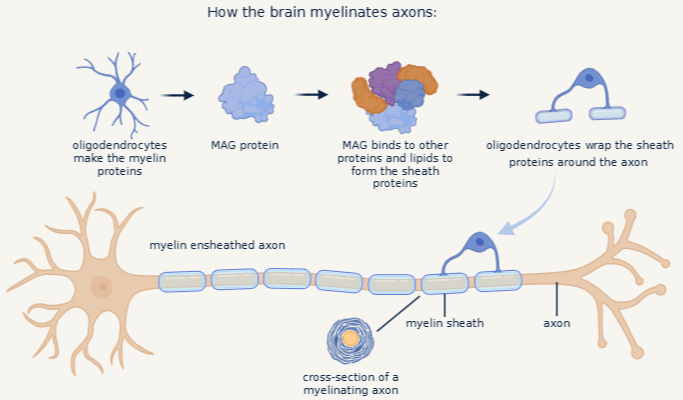
Created in: https://BioRender.com
Who are we?
Founded by family, Driven by the desire to find a cure.
We are Bespoke Genetic Medicines, a not-for-profit organisation built by the parents and family members of a young man named Joseph living with SPG75.
Driven by our mission to CureSPG75, we exist to accelerate research, connect isolated families, and fund the science that could change everything.
Community
Connecting the handful of families worldwide who carry this diagnosis, so no one faces it alone.
Research
Funding and facilitating scientific research into the genetic causes of HSPs and pathways to treatment.
Urgency
Our children can't wait decades. We operate with the urgency of parents who need answers now.
Joseph’s story
When Joseph was just four years old, he was handed a wooden walker and a misdiagnosis - Ataxic Cerebral Palsy. That little walker was the first of many. For the next two decades, he endured round after round of genetic testing, quietly searching for an answer that never seemed to come. Then, at 27, everything changed. At St George Hospital, Joseph finally received his first true genetic diagnosis through whole exome sequencing (WES) - a moment decades in the making.
It's an outcome more common than most people realise: today, with the advent of genetic sequencing, more than 30% of Cerebral Palsy cases are linked to a pathogenic genetic alteration.
When genetic testing finally put a name to Joseph’s condition; SPG75, it was both a relief and a gut punch.
A genetic diagnosis at last but no local medical knowledge of the condition, no active research, no treatment, and no community to lean on.
Bespoke Genetic Medicines is here to build a research capability for the children and adults already living with SPG75, and for families that will receive a diagnosis in the years to come.
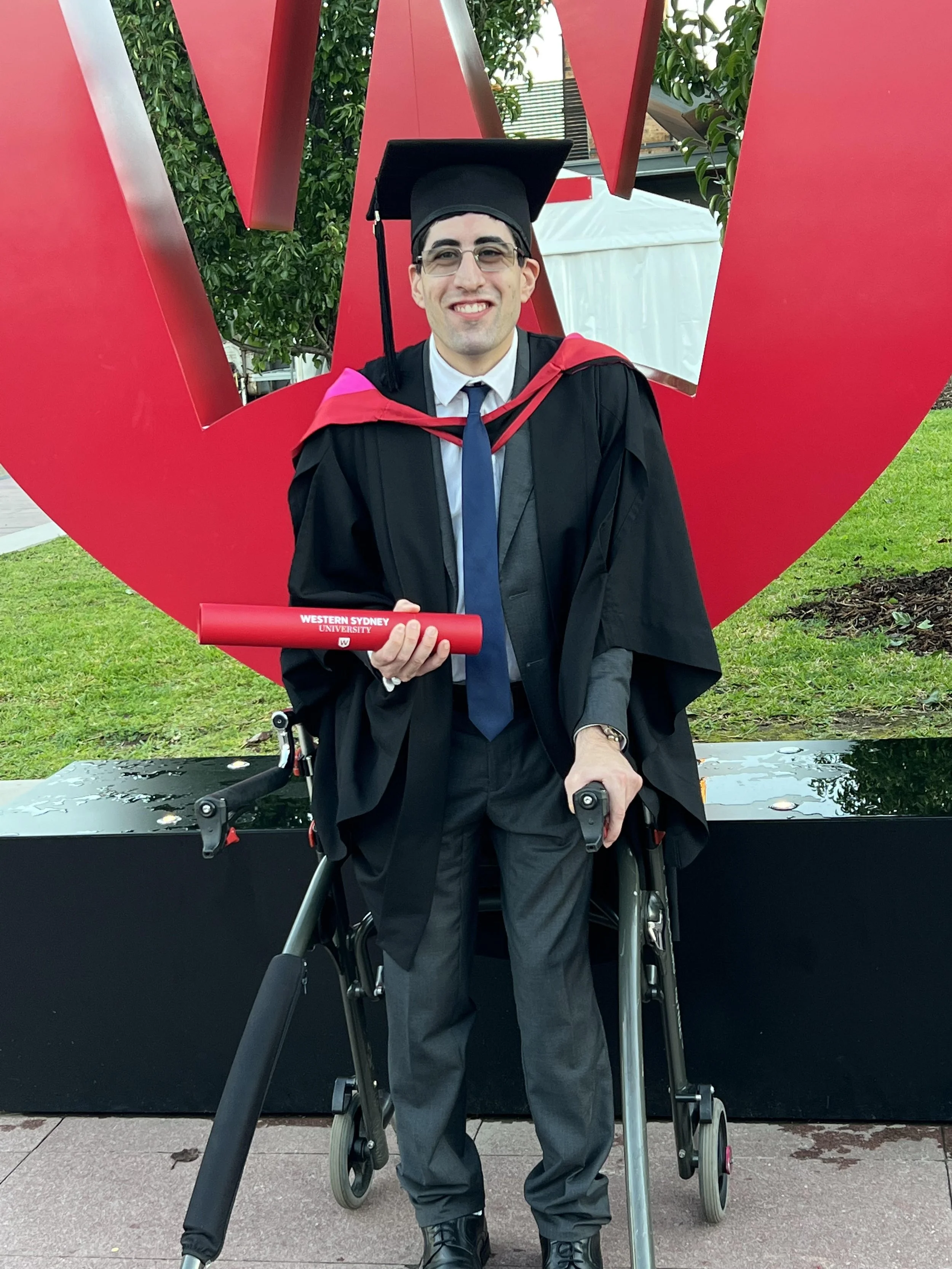
JOSEPH’S DIAGNOSTIC ODysSEY
Connect With Us
If you or someone you know has a HSP or SPG75, we want to hear from you.
Every family we connect with brings us one step closer to understanding this disease, and one step closer to a cure.
Whether you're a parent navigating a new diagnosis, a researcher working in this space, or simply someone who wants to help, there is a place for you in the CureSPG Mission.
Follow our journey, share our story, and together lets turn awareness into action.